You're descending Wolf Creek Pass with a loaded horse trailer behind you, and you tap the brakes to feel the trailer bite in and hold its own weight. If it doesn't, if the whole rig lurches forward and your tow vehicle's brakes are doing all the work, that's not a minor annoyance. That's a trailer brake system that needed attention weeks ago.
Key Takeaways
- Electric brakes wear from friction and corrosion: Colorado's dry climate and gravel roads accelerate lining wear and magnet buildup faster than owners expect.
- A weak or delayed brake feel is a warning sign, not a quirk: Trailer brakes that engage late, pull to one side, or feel spongy need inspection before your next trip.
- Controller sync problems mimic brake failure: A brake controller that isn't calibrated to your trailer's actual brake load can make good brakes feel bad and bad brakes feel dangerous.
- Mountain grades multiply brake demand: Sustained descents on I-70, Wolf Creek Pass, or Ute Pass ask far more of trailer brakes than flat highway towing ever will.
- Professional service checks the whole system: Magnets, drums, wiring, breakaway switches, and controller calibration all need to work together, not just the brake pads themselves.
1. How Electric Trailer Brakes Work and Why They Wear Out
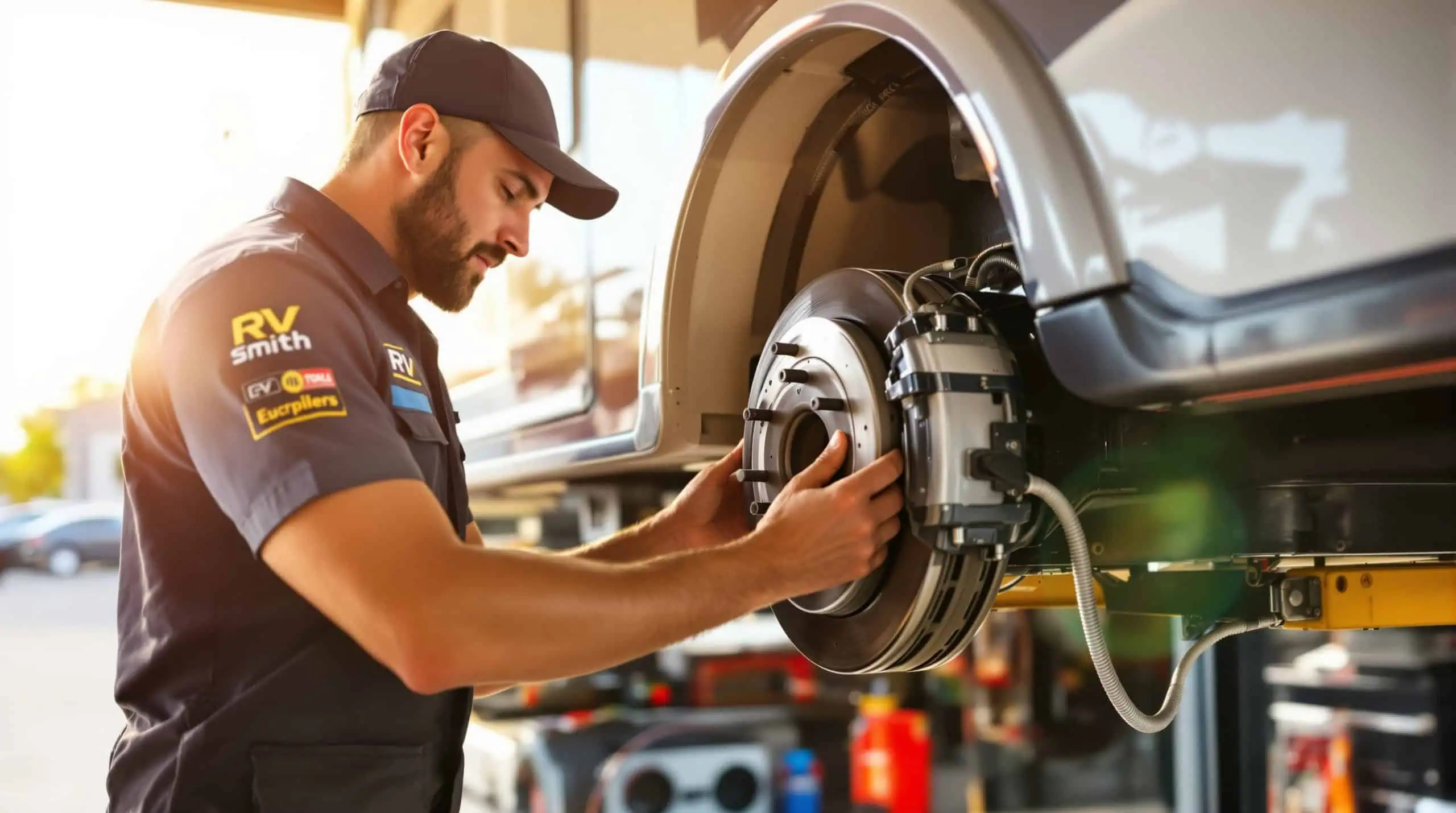
Most trailers towed behind pickups and larger tow vehicles in Colorado, whether it's a travel trailer, a gooseneck, or a living quarters horse trailer, use electric drum brakes. When you apply your tow vehicle's brakes, a brake controller mounted in the cab sends a proportional electrical signal to magnets inside each brake drum. Those magnets pull against a rotating armature, which forces the brake shoes outward against the drum, slowing the wheel. It's a fundamentally different system than the hydraulic disc brakes on your truck, and it depends on clean electrical connections, properly adjusted shoes, and magnets that haven't worn down or glazed over.
Wear happens the same way it does on any friction brake: heat and contact eventually thin the brake linings and round off the magnet's contact surface. But electric brakes have a failure mode hydraulic brakes don't. Corrosion. Every time a trailer sits, splashes through a puddle, or gets washed, moisture can work its way into the brake drum and wiring connections. Add Colorado's freeze-thaw cycles and the dust from unpaved forest roads and county gravel, and you've got a recipe for corroded magnets, pitted brake surfaces, and connectors that intermittently lose contact. A trailer that sits in storage all winter without a wheel bearing and brake check often surprises its owner in spring with brakes that grab unevenly or don't grab at all.
Drum Brakes vs. Disc Brakes on Trailers
Drum brakes remain the standard on most travel trailers and horse trailers because they're simpler, more affordable to maintain, and well suited to the intermittent duty cycle of towing. Disc brakes, increasingly common on heavier fifth-wheels and some horse trailer models, resist heat fade better on long descents and tend to be less sensitive to moisture intrusion. Neither type is maintenance-free, and both rely on a functioning brake controller to work correctly. If you're not sure which system your trailer has, the axle manufacturer's documentation, such as Dexter Axle's brake and hub literature, is a reliable place to confirm.
The Role of the Breakaway Switch
Every trailer with electric brakes should have a breakaway switch, a small pull-pin device wired to a battery that applies full trailer braking if the trailer separates from the tow vehicle. It's a safety-critical part that's easy to forget because it only matters in an emergency. A weak or dead breakaway battery means that if the unthinkable happens on a mountain grade, the trailer won't brake itself. This is one of the quickest checks in a full brake service and one of the most overlooked in DIY maintenance.
Why Idle Time Matters as Much as Miles
A trailer that's towed every weekend all summer and then parked for eight months isn't just aging on a calendar. Corrosion, dried-out grease, and moisture intrusion happen whether the trailer moves or not. Owners are often surprised that a trailer with relatively low mileage still needs brake service, but idle time is its own kind of wear, especially in a climate that swings from summer hail to winter hard freezes within the same calendar year.
2. Warning Signs Your Trailer Brakes Need Attention
Trailer brakes rarely fail all at once. They usually give warnings for weeks or months before a driver notices something's genuinely wrong, and those warnings are easy to dismiss as "just how the trailer tows." Recognizing them early is the difference between a routine service and a roadside problem on a mountain grade.
The most common sign is a change in how the trailer feels when you brake. If your rig used to settle smoothly and now it pulls to one side, lurches, or feels like the trailer is pushing the tow vehicle rather than helping to stop it, that's a brake system telling you something changed. A grinding or squealing noise from the wheels, a burning smell after a descent, or a wheel hub that feels noticeably hotter than the others after a drive are all signs worth stopping for immediately.
Uneven or Delayed Brake Engagement
If one side of the trailer brakes noticeably harder than the other, you'll often feel the trailer try to swing or fishtail slightly under braking, especially at highway speeds. This usually points to a magnet or brake shoe that's worn unevenly between axles, a wiring issue delivering less current to one side, or a controller output problem. It's uncomfortable to feel and it gets worse under load, which makes it particularly risky with a loaded horse trailer or a heavy travel trailer on a downhill grade.
Burning Smell or Overheated Hubs
A burning smell after towing, especially after a descent, usually means the brakes were working too hard for too long, either because they're doing more than their fair share of the stopping (a sign of a controller sync issue, covered next) or because a brake is dragging even when you're not pressing the pedal. Touching a wheel hub carefully after a drive (once it's had time to cool enough to be safe) and comparing side to side is a simple way to catch a dragging brake before it damages the bearing or drum.
Noise, Vibration, or a Brake Pedal That Feels Different
Squealing or grinding when braking is often the most obvious sign, but a vibration through the tow vehicle's steering wheel or a spongy feel in the brake pedal can also point to a trailer brake problem, not just a tow vehicle issue. Because trailer and tow vehicle brakes work together, a change in either system changes how the whole rig feels under braking. If you can't explain a new sensation with something that changed on your truck, the trailer is the next place to look.
3. Brake Controller Sync Issues and Common Mistakes
A brake controller is the small box, usually mounted under the dash, that translates your foot on the brake pedal into an electrical signal your trailer brakes understand. It sounds simple, but it's one of the most misunderstood parts of a towing setup, and a poorly calibrated controller can make perfectly good trailer brakes feel unsafe.
Most modern controllers are proportional, meaning they try to match the trailer's braking force to how hard you're braking the tow vehicle. That matching depends on a gain setting that has to be calibrated to the specific weight of the trailer you're currently towing. Tow an empty utility trailer one week and a fully loaded gooseneck horse trailer the next without adjusting the gain, and the brakes will feel wrong in one direction or the other: too weak and the tow vehicle does all the work, or too aggressive and the trailer brakes lock up and grab hard on light pedal pressure.
The Most Common Setup Mistakes
A surprising number of brake "problems" trace back to controller setup rather than the brakes themselves. Owners sometimes set the gain once when they buy the truck and never revisit it, even after switching trailers or adding significant cargo weight. Others install a controller but never properly ground the wiring connection, which causes intermittent or delayed brake response that's hard to diagnose without checking the electrical system directly. And on multi-trailer households, swapping the plug between trailers without rechecking the gain is one of the fastest ways to end up with brakes that don't match the load.
Why This Matters More With a Loaded Horse Trailer
A horse trailer's weight can change dramatically depending on whether it's empty, carrying hay and tack, or hauling live animals, and that live weight shifts during transport in a way cargo doesn't. A controller gain that's fine for an empty trailer will feel dangerously weak once it's loaded, right when you need confident, well-matched braking the most. This is one of the reasons horse trailer owners in particular benefit from having their brake controller and trailer brakes checked together rather than treating them as separate systems.
4. How Colorado Terrain Adds Extra Wear on Trailer Brakes
Towing in El Paso County isn't the same as towing on flat interstate in the Midwest, and trailer brakes here work harder than most owners realize. Sustained downhill grades ask the brakes to dissipate heat continuously for minutes at a time rather than in short bursts, and that kind of extended braking is exactly what wears linings, glazes magnets, and stresses wheel bearings fastest.
Routes like Ute Pass heading toward Woodland Park, the long grades on US-24 toward the Wilkerson Pass area, or any trip toward the high country puts real demand on a braking system that might otherwise only see gentle stops around town. Add gravel forest access roads to reach favorite boondocking or camping spots, and you're introducing dust and debris into brake drums that a paved-road-only trailer would rarely encounter. Combine that with Colorado's intense sun and wide temperature swings, which dry out seals and grease faster than milder climates, and it's easy to see why trailer brakes here need more frequent attention than the same trailer might need in a flatter, wetter state.
Descents Demand More Than Ascents
Climbing a grade taxes your tow vehicle's engine and cooling system, but descending it taxes the brakes, both the tow vehicle's and the trailer's. Riding the brakes continuously on a long downhill without using engine braking or downshifting builds heat that doesn't have time to dissipate, and that heat is what glazes brake linings and can even warp drums over time. Trailer brakes that are already marginal from wear or corrosion are far more likely to fade or fail on a Colorado mountain descent than on a flat highway stretch.
Altitude, Dust, and Dry Air
Colorado's dry climate and altitude don't just affect engine performance, they affect brake wear too. Dust from gravel roads works its way past even well-sealed hubs over time, and dry air accelerates the breakdown of grease and rubber seals compared to more humid regions. Owners who camp frequently in the backcountry around Pikes Peak, the Rampart Range, or the San Isabel National Forest are putting their trailer brakes through more than the average weekend camper, even if their total mileage looks modest.
Seasonal Extremes Compound the Wear
A trailer that tows through hot, dusty summer weekends and then sits through a hard Colorado winter faces wear from both directions: heat and dust cycling in season, followed by moisture and freeze-thaw cycling in storage. That combination is part of why a pre-season brake check matters just as much as winterization, and why brakes that were fine last fall shouldn't be assumed fine again without a look before the first big trip of the season.
5. What Professional Trailer Brake Service Includes
A proper trailer brake service goes well beyond swapping brake shoes. Because electric brakes are an integrated system of mechanical parts, wiring, and a controller in the cab, a thorough service checks every link in that chain, not just the parts that show visible wear.
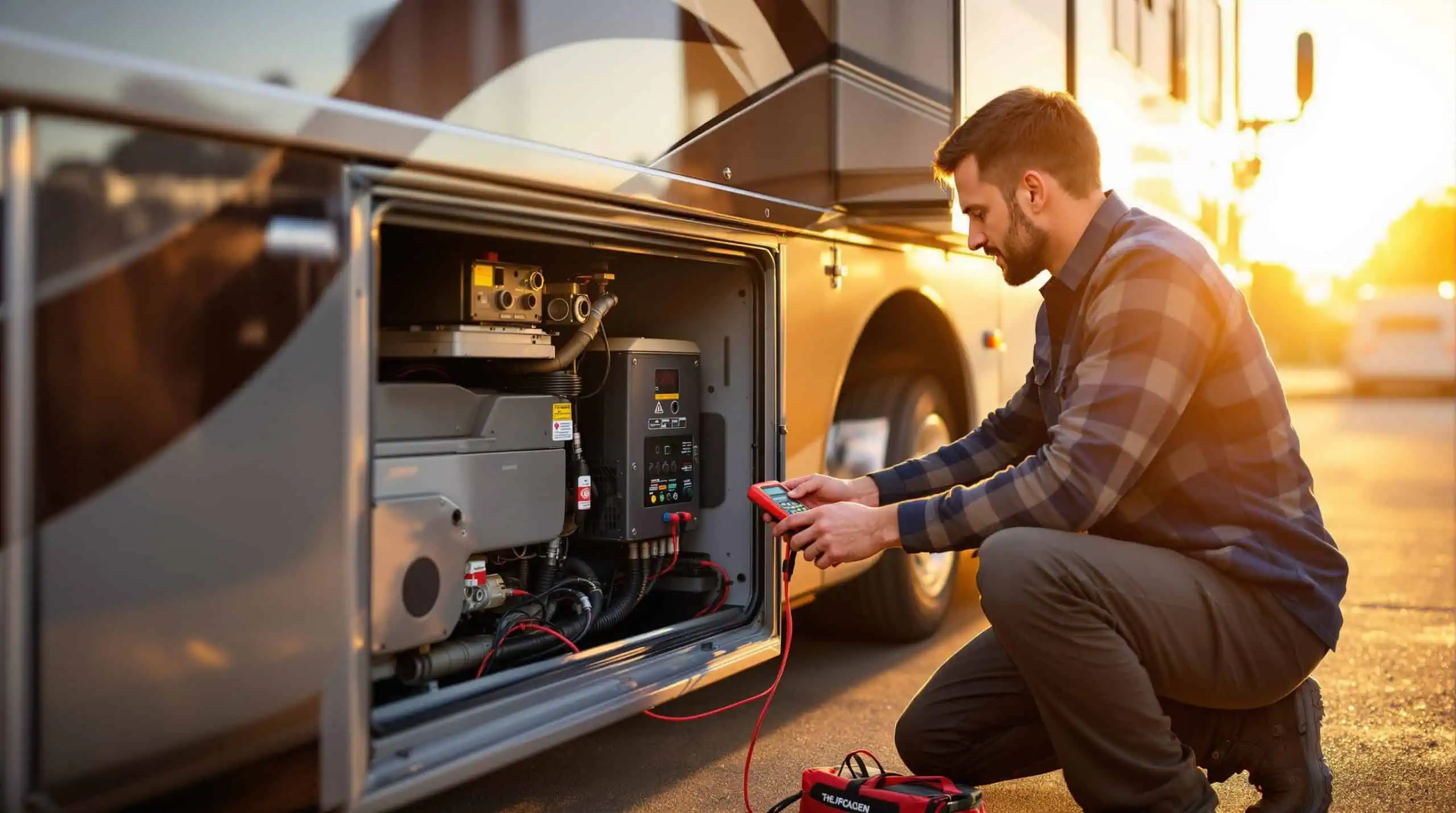
That starts with pulling the wheels and drums to inspect the brake shoes, magnets, and drum surfaces for wear, glazing, or corrosion, then checking the wiring and connectors at each wheel for corrosion or damage that could cause intermittent brake response. Wheel bearings get inspected and repacked as needed, since bearing failure and brake failure often show up together on trailers that haven't seen recent service. The breakaway switch and its battery get tested to confirm they'll actually apply the brakes in an emergency, and the brake controller in the tow vehicle gets checked and calibrated to match the trailer's actual weight and brake output.
The table below breaks down what a comprehensive service typically covers versus what a basic visual check catches.
| Service Area | Basic Visual Check | Comprehensive Brake Service |
|---|---|---|
| Brake shoes and magnets | Looked at through drum vent, if visible | Drums removed, shoes and magnets inspected directly |
| Wiring and connectors | Not checked | Inspected at each wheel for corrosion or damage |
| Wheel bearings | Not checked | Inspected and repacked as needed |
| Breakaway switch and battery | Visual check only | Function tested under load |
| Brake controller calibration | Not addressed | Checked and adjusted to trailer weight |
| Brake balance side to side | Not measurable | Verified and corrected |
The gap between the two columns is exactly why a trailer that "looked fine" during a quick pre-trip glance can still have brakes that aren't safe on a mountain descent. A certified technician isn't just replacing worn parts, they're confirming the whole system works together the way it's supposed to.
Why Certified Axle and Hitch Knowledge Matters
Different axle manufacturers, including Dexter Axle, specify particular adjustment procedures, torque values, and component tolerances for their brake systems. A shop with manufacturer certification on the axle and hitch components your trailer uses is working from the actual specifications rather than generic guesswork, which matters when the margin for error on a loaded horse trailer descending a mountain pass is genuinely thin.
What Owners Can Check Between Services
Owners can reasonably keep an eye on a few things themselves between professional services: checking that trailer brake lights and turn signals work, listening for new noises during short test drives, and doing a quick temperature check on hubs after towing. These checks won't replace a full inspection, but they help catch a developing problem early enough to get it addressed before a bigger trip.
6. Staying Safe on Mountain Grades with a Loaded Trailer
Even a perfectly serviced brake system needs to be driven with the terrain in mind. Colorado's grades reward drivers who plan ahead and punish those who treat mountain descents like flat highway driving, and that's true whether you're towing a lightweight utility trailer or a fully loaded living quarters horse trailer.
The single most effective habit is using your tow vehicle's engine braking or a lower gear on long descents rather than relying on brakes alone to control speed. This keeps trailer brakes from building up the sustained heat that leads to fade, and it gives you a real safety margin if you need firm braking unexpectedly, say for a sudden traffic slowdown or wildlife in the road. Checking your brake controller's gain setting before a trip, especially if you're towing a different load than usual, takes just a minute and can be the difference between confident stopping and a scary surprise on the first steep grade.
Pre-Trip Checks Before Any Mountain Route
Before heading toward any significant grade, whether that's Ute Pass, a trip over Wolf Creek Pass, or a haul up toward the high country for a horse show or a boondocking weekend, take a few minutes to verify your brake controller is set for your current load, your trailer lights and brakes function correctly, and your breakaway cable is properly attached. It's a habit that takes less time than a fuel stop and it's worth doing every single time your load changes.
Know When It's Time for a Professional Look
If your trailer's brakes have felt different lately, if you've noticed any of the warning signs covered earlier, or if it's simply been a while since a certified technician has had eyes on the system, that's reason enough to get it checked before your next big trip. Colorado's terrain doesn't give much room for brakes that are working at less than their best, and catching a developing issue in the shop is a far better experience than discovering it on a mountain grade.
FAQs
How do I know if my trailer brakes are going out?
Watch for the trailer pulling to one side under braking, a burning smell or hot hubs after driving, grinding or squealing noises, or a brake pedal that suddenly feels different than usual. Any of these warrants an inspection before your next tow.
What causes trailer brake controller problems?
Most controller issues trace back to a gain setting that doesn't match the trailer's current weight, a poor ground connection in the wiring, or corrosion at the plug connector. Recalibrating the gain after switching trailers or adding significant cargo weight prevents most of these problems.
How often should trailer brakes be serviced in Colorado?
There's no single mileage rule, since Colorado's dry climate, gravel roads, and seasonal storage all add wear beyond what mileage alone shows. A pre-season inspection each spring, plus attention to any of the warning signs covered above, is a reliable approach for most owners.
Do horse trailers need different brake service than travel trailers?
The underlying electric brake system is similar, but horse trailers face variable live weight that shifts during transport, which makes accurate controller calibration especially important. A trailer that tows fine empty can feel underbraked once it's loaded with animals and tack.
Can a bad breakaway switch cause a failed inspection or safety issue?
Yes. A weak or dead breakaway battery means the trailer won't apply its brakes automatically if it separates from the tow vehicle, which is a genuine safety risk on any grade. Testing the breakaway switch and battery is a standard part of a proper brake service.
Conclusion
Trailer brakes rarely fail without warning, but the warnings are easy to miss if you don't know what to listen and feel for. From uneven engagement and burning smells to controller sync issues that make good brakes feel bad, the signs covered here are worth taking seriously, especially with Colorado's grades adding wear that flatland towing simply doesn't produce. A trailer brake system that's inspected, adjusted, and calibrated as a whole, rather than patched piece by piece, is what actually keeps a loaded horse trailer or travel trailer confident on a mountain descent.
The RV Smith brings certified expertise in Dexter Axle, Lippert, and B&W systems to every trailer brake service, working from a 10,000 square foot purpose-built shop in Colorado Springs where the team fixes the problem right the first time, whether it's a travel trailer, gooseneck, or living quarters horse trailer. Colton and Kenzie Smith built this business around getting Colorado RV owners back on the road with confidence, not just a quick patch job.
Schedule Service with The RV Smith to get your trailer brakes and controller inspected before your next mountain trip. Whether you're hauling horses up Ute Pass or towing a travel trailer toward your favorite boondocking spot, a properly serviced brake system is what lets you focus on the adventure instead of the descent.